
Real apps. Already signed in.
Let your agent work in the apps you already use, with your accounts, messages, files, and notifications on the actual phone.
Let your agent see the screen, use your apps, and get things done. Tapkit connects it to your iPhone, with you in control.
Your agent sees the screen, chooses the next step, and puts it into action.
Let your agent work in the apps you already use, with your accounts, messages, files, and notifications on the actual phone.
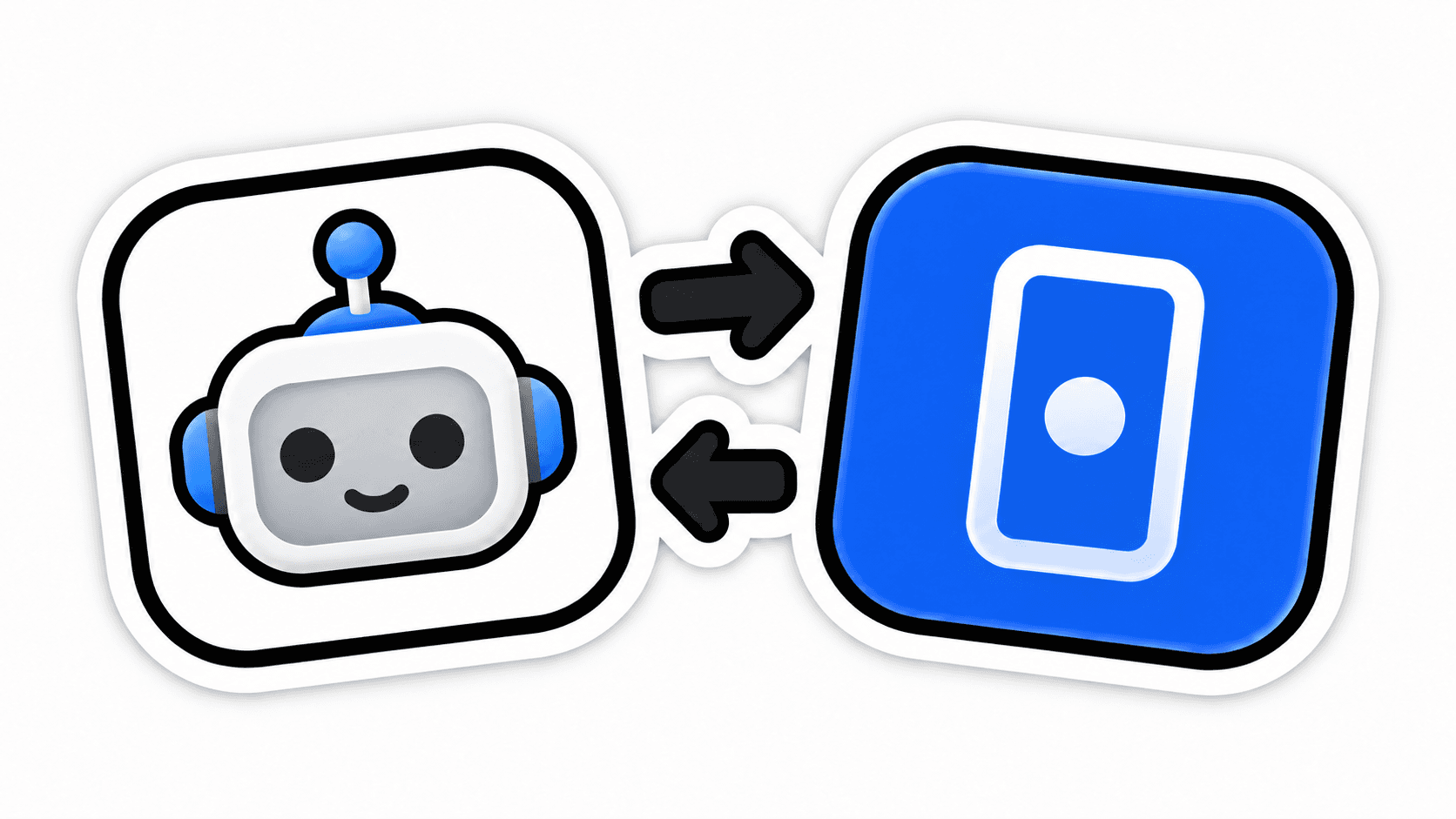
Use Claude, Codex, or your own agent. Connect through MCP, the REST API, or the Python SDK to give it eyes and hands on your iPhone.

Watch the phone as your agent works, inspect its session history, and take over for a login, a quick correction, or anything you want to handle.
The basics, from the first tap
to your own workflows.
An iPhone agent is an AI that can see the phone’s screen, decide what to do next, and act with taps, swipes, and typing. It checks the screen again after each step to work toward your request. Tapkit gives the agent access to a real iPhone and the controls to use it.
Use an agent to explore apps, work across messages and files, or test a flow on a real device. It can move between apps as the task needs. Start with a personal assistant or put it to work on app development and testing.
A real iPhone has the App Store apps, signed-in accounts, notifications, and permissions you use every day. That lets an agent work through mobile workflows even when an API is missing. See how Tapkit compares with the iOS Simulator and Appium.
Bring the agent you already use. Tapkit connects your iPhone as a tool, so your agent doesn’t have to run inside an iOS app. Follow the MCP setup to connect an existing agent, or use the REST API and Python SDK in your own workflows.
